Key Takeaways
This article explains TMJ disorder symptoms, dental evaluation, conservative treatment, and how to prepare for a consultation.
- TMJ disorders can affect 1 or both jaw joints and the chewing muscles, causing pain, stiffness, or locking.
- A TMJ disorder evaluation starts with your history and a physical examination; imaging is not always necessary.
- TMJ disorder care follows 3 broad steps: assessment, an individualized care plan, and review of your response.
- A painless click alone does not necessarily need TMJ disorder treatment, but pain or locking warrants assessment.
If you are considering a Jamsil TMJ disorder consultation, persistent jaw pain, repeated locking, or difficulty chewing are reasons to arrange an examination. Jaw clicking can be worrying, especially when you are unsure whether treatment will fit your budget or your stay in Korea. This guide explains what an evaluation involves, which treatments may be considered, and what to ask before agreeing to care.
What symptoms suggest a TMJ disorder?
Jaw pain, painful clicking, stiffness, and restricted opening can suggest a TMJ disorder, but symptoms alone cannot establish the diagnosis.
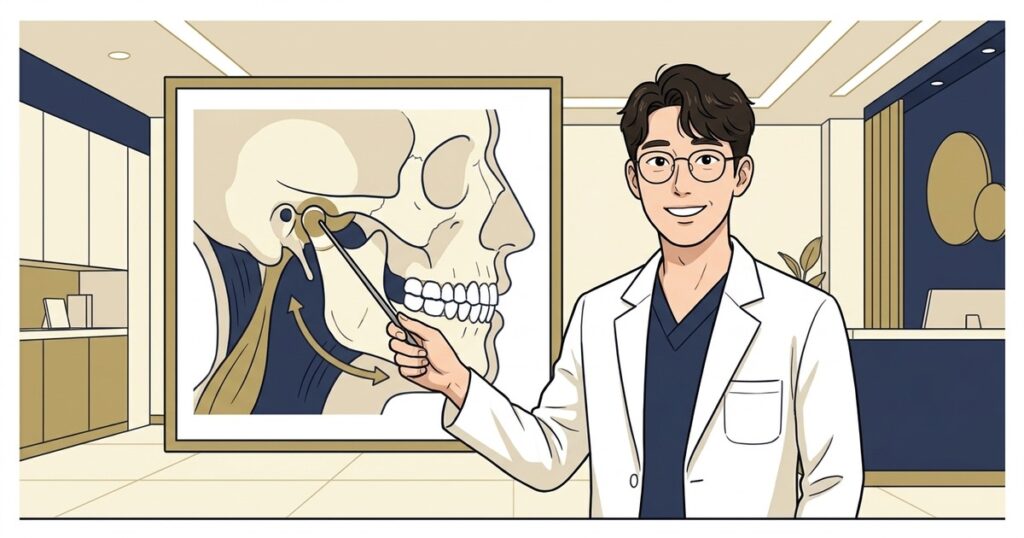
Temporomandibular disorders, usually abbreviated TMD, are conditions affecting the jaw joints, chewing muscles, or related structures. “TMJ” means temporomandibular joint—the joint connecting the lower jaw to the skull—but patients often search for “TMJ disorders” when looking for help with jaw symptoms.
Symptoms may affect 1 or both sides. They can fluctuate with chewing, clenching, stress, or prolonged opening, although these patterns do not prove a particular cause.
- Pain near the ear, temple, cheek, or jaw when chewing.
- Jaw stiffness, reduced opening, or a catching or locking sensation.
- Clicking or grinding sounds accompanied by discomfort.
- Jaw muscle tenderness or fatigue.
A painless click without limited movement does not automatically require treatment. Ear discomfort and headaches can also have causes unrelated to the jaw, so a dentist may recommend evaluation by another clinician when appropriate.
How do dentists evaluate jaw pain?
A TMJ disorder evaluation begins with a symptom history and physical examination; imaging is selected only when it may clarify the diagnosis or change care.
Expect questions about when symptoms began, whether the jaw locks, previous injuries, dental pain, sleep, medications, and habits such as gum chewing or clenching. The examination may assess jaw movement, muscle and joint tenderness, joint sounds, and the teeth.
There is no single test that identifies every TMJ disorder. Dental disease, infection, nerve pain, and other conditions may need to be considered before attributing pain to the jaw joint.
| Assessment | What it can help assess | Important limitation |
|---|---|---|
| History and examination | Pain patterns, movement, tenderness, and possible dental causes. | Findings must be interpreted together, not in isolation. |
| Dental X-rays or CBCT | Teeth and bony structures when clinically indicated. | These do not show the joint disc as MRI does. |
| MRI | The joint disc and other soft tissues in selected cases. | It is not required for every click or episode of jaw pain. |
The number of appointments depends on what the examination finds and whether additional testing or referral is needed. Ask what each proposed test would help determine before proceeding.
What are the steps in TMJ disorder treatment?
TMJ disorder care generally starts with conservative, reversible measures and changes according to the diagnosis and your response.
Conservative treatment means care that avoids surgery or permanent changes to the teeth or bite. It may include education, temporary changes in chewing habits, appropriately selected exercises, medication, or an oral appliance.
- Step 1: Establish the likely source of pain. The dentist reviews your symptoms and examines the jaw and teeth. Further tests or referral may be recommended if the cause remains unclear.
- Step 2: Choose an individualized initial plan. Discuss the purpose, risks, alternatives, and cost of each option. A splint is not necessary for everyone, and medication choices depend on your health history.
- Step 3: Review symptoms and function. Follow-up checks whether chewing, opening, and daily comfort are improving. Persistent or worsening symptoms may call for a revised diagnosis, a different approach, or specialist referral.
An occlusal splint is a removable dental appliance worn over the teeth to alter tooth contact or protect against loading in selected patients. It is not a guaranteed cure, and its fit and effects should be monitored.
There is no reliable treatment duration that applies to everyone. Muscle pain, joint inflammation, locking, and long-standing pain may require different follow-up schedules. Ask when your response should be reviewed and what would trigger a change in the plan.
Permanent bite changes, extensive dental reconstruction, or surgery should not be presented as routine first steps for uncomplicated TMD. More invasive options require a clear indication and a discussion of their limitations.
Questions to Ask Before Treatment
What findings suggest that my pain comes from the joint, muscles, or another source?
Why do you recommend this treatment, what are the alternatives and risks, and when should we review my response?
What can you do at home, and when is care urgent?
Reducing strain may help a sore jaw, but sudden locking, trauma, swelling, or systemic symptoms need prompt assessment rather than home treatment alone.
While waiting for an appointment, choose foods that are comfortable to chew and avoid gum, very chewy foods, and deliberately wide opening. Keep the jaw relaxed when not eating; the teeth do not need to remain pressed together.
- Try gentle warmth or a cool pack wrapped in a cloth if it feels comfortable; stop if it worsens symptoms.
- Do not force the jaw open or repeatedly move it to reproduce a click.
- Avoid starting forceful jaw exercises or using a self-adjusted appliance without advice.
- Ask a dentist or pharmacist whether an over-the-counter pain reliever is appropriate for your medical history and medications.
Seek prompt care if the jaw suddenly locks or you cannot eat or drink adequately. A jaw stuck open may require urgent treatment. Fever with facial swelling, significant injury, or rapidly worsening symptoms also needs urgent evaluation; difficulty breathing or swallowing is an emergency.
How can you prepare for a Jamsilsaenae TMJ disorder consultation?
Bring a clear symptom history and confirm language support, expected charges, and follow-up arrangements before your appointment.
For patients seeking Songpa TMJ disorder care, Yonsei Gunho Dental Clinic is located in Seoul. The clinic lists Dr. Park Jiho, Chief Director and specialist in Oral and Maxillofacial Surgery, among its clinicians; this article does not indicate that he reviewed it.
Prepare the date symptoms began, the activities that aggravate them, any episodes of locking, and a list of medications. Bring previous imaging or appliance information if available, which may help the dentist understand earlier care.
If you need English communication or interpretation, ask what support is available rather than assuming it is included. International insurance and Korean National Health Insurance coverage vary by eligibility and service, so request an itemized estimate and confirm coverage with the clinic and insurer.
If you are leaving Korea soon, share your departure date before starting treatment. Ask whether an appliance would need adjustment, how follow-up would work, and what records could be provided for continued care elsewhere.
Conclusion: What should your next step be?
A useful next step is an examination that identifies the likely pain source and explains appropriate options without assuming that every jaw click needs treatment.
TMJ disorders can involve the joints, muscles, or both. Treatment should follow the findings, begin conservatively when appropriate, and include reassessment rather than a promise of a fixed result.
If you are comparing Jamsil TMJ disorder care, considering a Jamsilsaenae TMJ disorder consultation, or looking for Songpa TMJ disorder evaluation, you can contact Yonsei Gunho Dental Clinic in Seoul at 02-6956-9949. Ask about appointment availability, communication support, and assessment fees before your visit.
This article is provided for general dental health information only and is not a substitute for professional medical advice on a specific diagnosis or treatment. Treatment methods, duration and outcomes vary with each patient’s oral condition, so please consult a dentist directly for an accurate diagnosis and treatment plan.
Frequently Asked Questions (FAQ)
Does jaw clicking mean I need TMJ disorder treatment?
No, painless clicking alone does not necessarily need treatment. Arrange an evaluation if clicking comes with pain, repeated locking, reduced opening, or difficulty chewing.
How long does TMJ disorder treatment take?
There is no single treatment timeline for TMJ disorders. Duration depends on the diagnosis, symptom severity, and response to care; ask when reassessment is planned and what improvement to monitor.
Do I need an MRI for jaw pain?
Not everyone with jaw pain needs an MRI. A dentist first reviews your history and examines your jaw, then considers imaging if the findings could clarify the diagnosis or change treatment.
Can I book a Jamsil TMJ disorder consultation if I only speak English?
Contact the clinic before booking to confirm available language support. Explain your symptoms and ask about interpretation, assessment fees, insurance documents, and any follow-up needed during your stay.
Can a night guard cure a TMJ disorder?
A night guard is not a guaranteed cure for a TMJ disorder. A dentist may recommend a monitored appliance for selected patients, but its suitability depends on the diagnosis, fit, and your response.