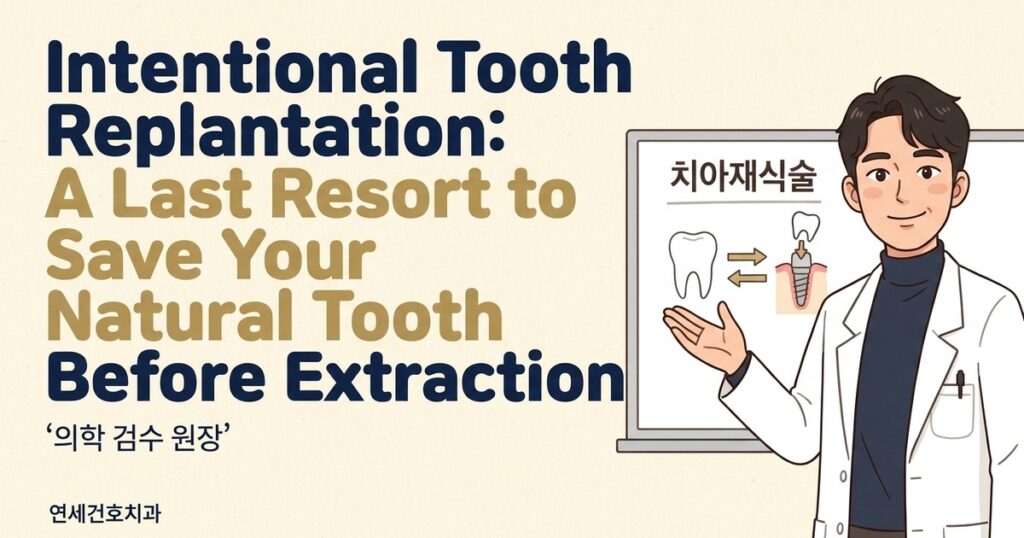
Intentional Tooth Replantation: A Last Resort to Save Your Natural Tooth Before Extraction
Key Takeaways
This article covers intentional tooth replantation—when it can save a tooth otherwise destined for extraction, who qualifies, and what realistic outcomes to expect.
- Intentional replantation is a procedure where a tooth is carefully extracted, treated outside the mouth, and repositioned into its socket—often used when root-end surgery is not feasible due to difficult anatomy.
- Reported success rates range from roughly 70% to 90% depending on case selection and root condition, but outcomes vary with each patient’s tooth structure and healing response.
- Not every tooth qualifies; teeth with severe vertical root fractures, advanced bone loss, or insufficient remaining tooth structure may still require extraction and replacement.
- A thorough evaluation by specialists—ideally an endodontist or oral surgeon—helps determine whether replantation offers a genuine chance to preserve your natural tooth.
If you’ve been told your tooth needs to come out and an implant is the only solution, you may be wondering whether any other option exists. Intentional tooth replantation offers one additional possibility—a procedure that removes a problem tooth, treats it outside the mouth, and places it back—but it is not a universal fix. For many expats, international students, and visitors navigating dental care in Korea, understanding this option can be especially valuable: it may allow you to keep a natural tooth longer, potentially reducing cost and avoiding a more complex surgical timeline during your stay.
This guide explains what intentional replantation involves, who qualifies, and what realistic expectations look like. We’ll also clarify when this procedure is not appropriate, because honest information matters more than false hope.
What Is Intentional Tooth Replantation?
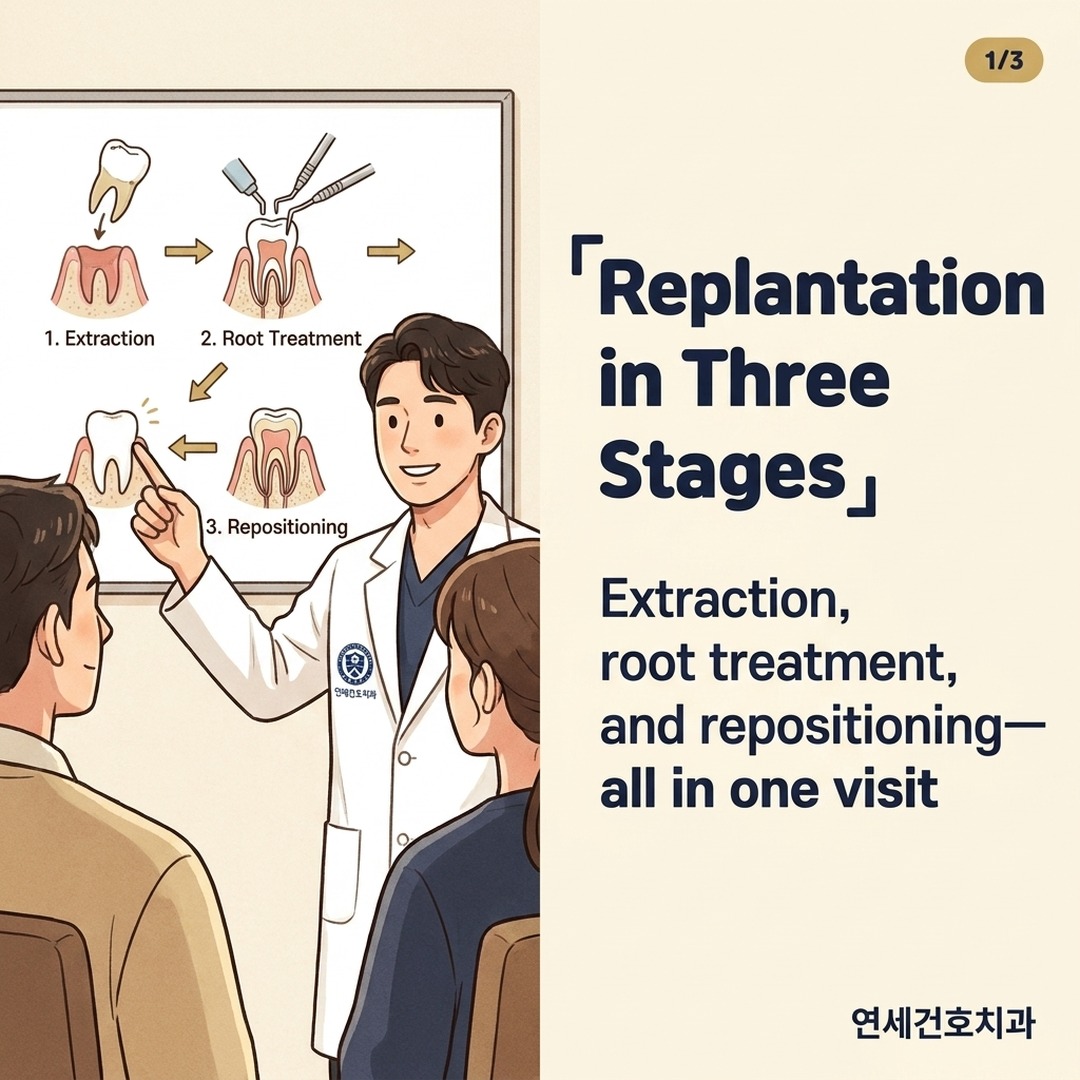
Intentional tooth replantation is a procedure in which a dentist purposefully extracts a tooth, performs necessary treatment on its root surface while the tooth is outside the mouth, and then reimplants it into the original socket. This approach differs from traumatic avulsion (when a tooth is knocked out accidentally); here, everything is planned and controlled.
The technique is typically reserved for teeth that have persistent infection at the root tip—especially molars with complicated root anatomy that makes conventional root-end surgery (apicoectomy) technically difficult or impossible. When root canals curve sharply, when there are multiple canals that couldn’t be fully cleaned, or when the tooth sits close to critical structures like the inferior alveolar nerve, working outside the mouth gives the clinician direct access to the root surface.
Intentional replantation is not new. It has been documented in dental literature for decades, though it remains less commonly performed than standard root canal retreatment or surgical endodontics. The reasons are practical: success depends heavily on case selection, gentle extraction technique, and the condition of the periodontal ligament cells that must survive if the tooth is to reattach.
Published literature reports success rates generally in the range of 70% to 90%, but these figures come with caveats. Success in this context often means the tooth remains functional and asymptomatic for a defined follow-up period—typically three to five years. Some teeth eventually fail due to root resorption or re-infection. Others remain stable for a decade or more. Because outcomes vary considerably, a careful diagnostic workup is essential before proceeding.
Who Is a Candidate—and Who Isn’t?
The best candidates are patients whose teeth have persistent periapical infection but enough solid root structure and surrounding bone to support healing. Replantation works best when standard retreatment has failed or is impractical, and when surgical access from outside (apicoectomy) poses anatomical challenges.
Situations where replantation may be considered:
- Molars with curved or calcified canals that cannot be instrumented fully from the crown-down approach
- Teeth with root-end pathology located close to the maxillary sinus or mandibular nerve, making traditional surgery risky
- Previously treated teeth with separated instruments or persistent lesions despite retreatment
- Teeth where a crown or post makes re-accessing the canals from above impractical
Situations where replantation is generally not advisable:
- Vertical root fractures—these teeth rarely heal successfully after replantation
- Severe periodontal disease with significant bone loss around the roots
- Teeth with very little remaining coronal structure (minimal tooth above the gumline)
- Roots that are fused, extremely fragile, or excessively curved in ways that risk fracture during extraction
- Patients with uncontrolled systemic conditions affecting healing (unmanaged diabetes, immunosuppression)
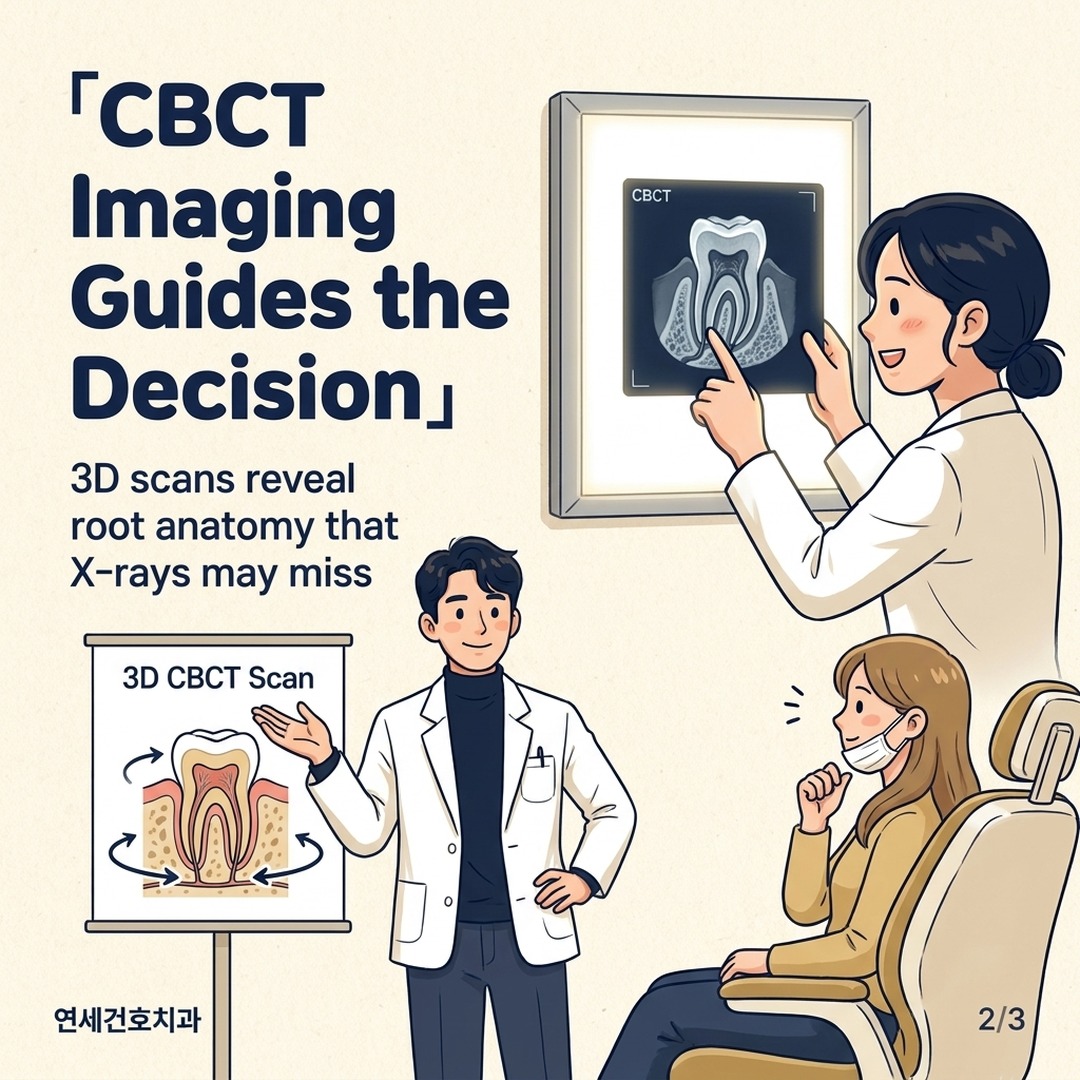
An honest evaluation requires 3D imaging (CBCT) to visualize root anatomy and surrounding bone. Without this step, neither the patient nor the clinician can make an informed judgment about feasibility.
| Factor | Favorable for Replantation | Unfavorable for Replantation |
|---|---|---|
| Root structure | Intact roots with minimal resorption | Vertical fracture, severe external resorption |
| Bone support | Healthy bone surrounding at least 2/3 of roots | Advanced bone loss, grade III mobility |
| Periodontal status | No severe gum disease; pocket depths controlled | Active periodontitis with purulent discharge |
| Previous treatment | Root canal done but with persistent lesion; apicoectomy not feasible | Multiple failed surgical attempts; extensive scarring |
| Anatomy | Single-rooted or separable multi-rooted tooth | Fused roots, divergent roots at high fracture risk |
How the Procedure Works: Step-by-Step
Intentional replantation requires meticulous planning and execution to preserve the delicate periodontal ligament fibers on the root surface. The entire extra-oral time—when the tooth is outside the mouth—should be kept as short as possible, ideally under 15 minutes.
- Step 1: Diagnostic imaging and planning – A CBCT scan is taken to evaluate root anatomy, lesion size, and proximity to vital structures. The clinician confirms the tooth is a reasonable candidate and discusses realistic outcomes with the patient.
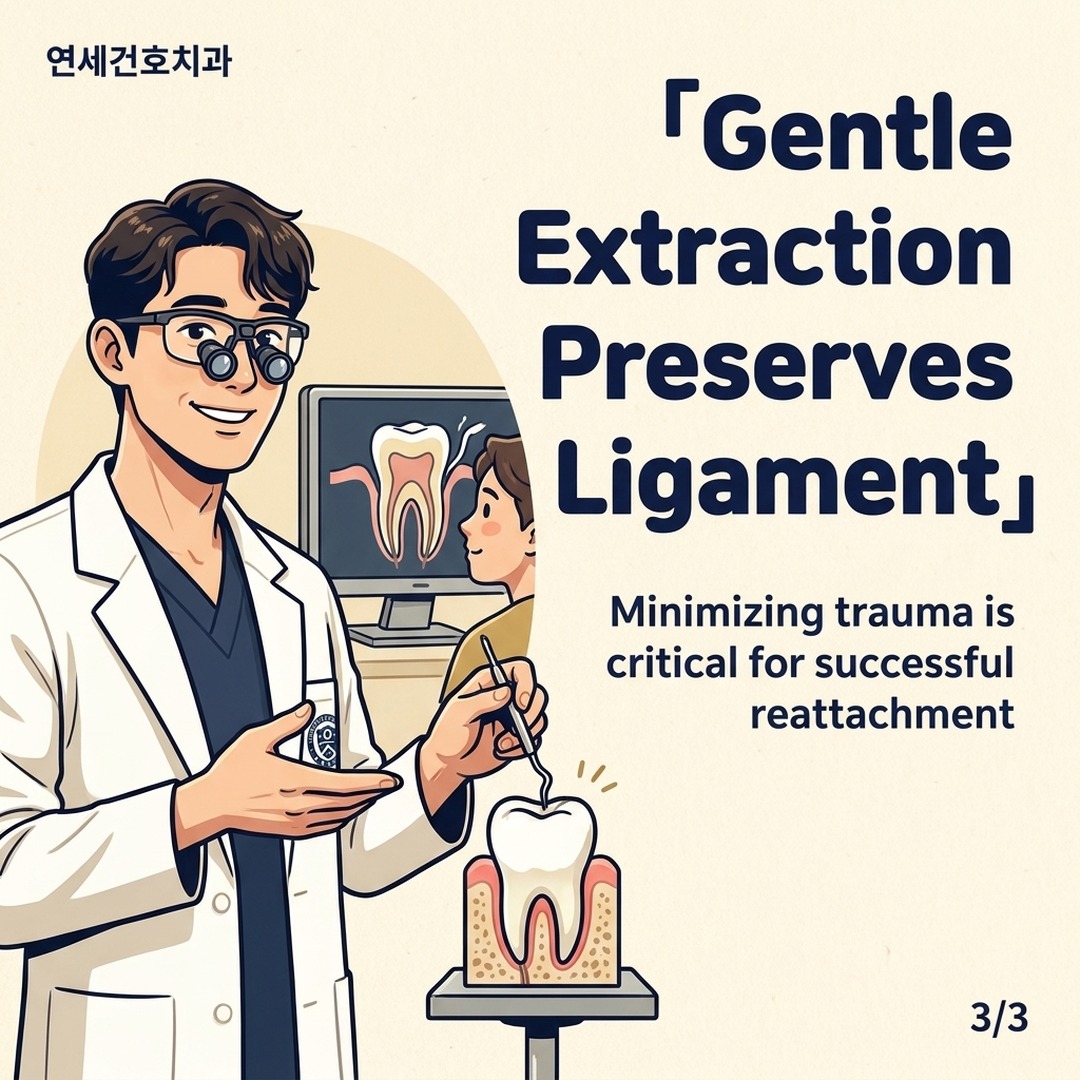
- Step 2: Anesthesia and atraumatic extraction – Local anesthesia is administered. Using specialized instruments, the dentist loosens the periodontal ligament and extracts the tooth with minimal force to avoid root fracture and preserve ligament cells.
- Step 3: Extra-oral examination and treatment – Once removed, the tooth is kept moist (often in saline or the patient’s own blood). The clinician inspects the root surface under magnification, removes infected tissue, resects the root tip if necessary, and places a biocompatible filling material to seal the canal end.
- Step 4: Socket preparation – The socket is gently irrigated to remove debris and granulation tissue. Excessive curettage is avoided to preserve bony walls.
- Step 5: Replantation and splinting – The treated tooth is repositioned into the socket. A flexible splint (often a thin wire bonded to adjacent teeth) stabilizes it for approximately two weeks, allowing the ligament to reattach.
- Step 6: Follow-up monitoring – Clinical and radiographic checks at 2 weeks, 1 month, 3 months, 6 months, and annually thereafter assess healing. Signs of failure include progressive mobility, resorption, or recurrent infection.
A note from Dr. Park Ji-ho (박지호 대표원장), Oral & Maxillofacial Surgeon
One thing patients often overlook is that the tooth must come out gently. If extraction damages the root or strips away the ligament, replantation success drops sharply—no matter how well the root is treated outside the mouth. That’s why we evaluate each case carefully and only proceed when we’re confident we can extract without causing harm.
Why This May Be Considered Before an Implant
Preserving a natural tooth—even temporarily—can have practical benefits that extend beyond biology. A successful replantation maintains your own tooth structure, preserves the surrounding bone, and delays or eliminates the need for implant surgery. For international residents in Korea, this can mean fewer visits, a shorter treatment timeline, and potentially lower costs during a limited stay.
That said, replantation is not automatically superior to an implant. Modern implants have excellent long-term survival rates, often exceeding 95% at ten years in healthy patients. If a tooth’s prognosis after replantation is uncertain, some patients may prefer the predictability of extraction and implant placement.
The decision often comes down to individual priorities. Ask yourself:
- How important is it to keep my own tooth, even if it might need extraction later?
- How much time do I have in Korea? Can I return for follow-ups if needed?
- What is my tolerance for uncertainty versus a more predictable prosthetic option?
A second opinion can help clarify options. If you were told elsewhere that extraction and implant is the only path, consulting a practice that specializes in tooth preservation may reveal alternatives—or confirm that extraction really is the best choice. Either way, you make the decision with fuller information.
Recovery, Post-Op Care, and What to Watch For
Most patients can return to normal activities within a few days, though the splint remains in place for roughly two weeks. Discomfort is typically manageable with over-the-counter pain relievers; prescription medication is rarely necessary beyond the first day or two.
Guidelines for the first two weeks after replantation:
- Step 1: Protect the splint – Avoid chewing directly on the replanted tooth. Soft foods (scrambled eggs, soup, yogurt) reduce stress on the healing ligament.
- Step 2: Maintain oral hygiene carefully – Brush gently around the splinted area. A chlorhexidine rinse may be prescribed to control bacteria without mechanical irritation.
- Step 3: Watch for warning signs – Increasing pain, swelling that worsens after day three, pus discharge, or loosening of the splint warrants prompt contact with your dentist.
After splint removal, the tooth is monitored periodically. Some degree of initial mobility is normal; it typically stabilizes over three to six months as the ligament reattaches. Radiographs track bone healing and detect early signs of root resorption, which—if it occurs—tends to become evident within the first year.
Long-term success depends on continued care: routine cleanings, avoiding excessive force on the replanted tooth, and addressing any new dental problems promptly. A replanted tooth is not invincible; it remains susceptible to decay, gum disease, and mechanical overload just like any other tooth.
Conclusion: Making an Informed Decision About Saving Your Tooth
Intentional tooth replantation occupies a specific niche in dentistry: it is neither a miracle cure nor a fringe experiment. When performed on well-selected cases by experienced clinicians, it offers a legitimate option for preserving a tooth that would otherwise be lost. At the same time, it carries inherent uncertainty—outcomes range from many years of function to early failure—and not every tooth qualifies.
Understanding your options matters. If you have been told extraction is inevitable, seeking a second opinion from a specialist in tooth preservation can provide clarity. You may learn that replantation or another conservative approach is worth attempting. Or you may confirm that an implant truly is the most reliable solution for your situation. Either conclusion is valuable.
For those in the Jamsil (잠실) and Songpa (송파구) area of Seoul (서울) looking for an evaluation, Yonsei Gunho Dental Clinic (연세건호치과) offers consultations with board-certified specialists in oral & maxillofacial surgery and endodontics. English-speaking staff can help international patients navigate appointments. The clinic is located within a five-minute walk from Jamsil Saenae Station (Line 2) and Sports Complex Station (Lines 2 and 9). To schedule a consultation, call 02-6956-9949.
This article is provided for general dental health information only and is not a substitute for professional medical advice on a specific diagnosis or treatment. Treatment methods, duration and outcomes vary with each patient’s oral condition, so please consult a dentist directly for an accurate diagnosis and treatment plan.
Frequently Asked Questions (FAQ)
How long does an intentional tooth replantation procedure take?
The entire appointment usually lasts 60 to 90 minutes. The tooth itself is outside the mouth for only 10 to 15 minutes; keeping this time short protects the periodontal ligament cells that are essential for successful healing and reattachment.
Is intentional replantation painful?
Local anesthesia numbs the area completely during the procedure, so you should not feel pain. Afterward, mild to moderate discomfort is common for one to three days and is typically controlled with over-the-counter pain relievers. Severe pain is unusual and warrants a follow-up call.
What is the success rate of intentional tooth replantation?
Published studies report success rates generally between 70% and 90%, depending on case selection and technique. Success means the tooth remains functional and symptom-free over the follow-up period. Individual outcomes vary based on root condition, bone health, and healing response.
How long does the replanted tooth last?
Some replanted teeth remain stable for ten years or longer; others fail within months. Longevity depends on how well the periodontal ligament reattaches, whether root resorption occurs, and ongoing oral hygiene. Regular monitoring helps detect problems early.
Can any dentist perform intentional replantation?
While general dentists may have training in the technique, replantation is most commonly performed by oral surgeons or endodontists experienced in microsurgical and atraumatic extraction methods. Case selection and surgical precision significantly influence outcomes, so specialist evaluation is recommended.