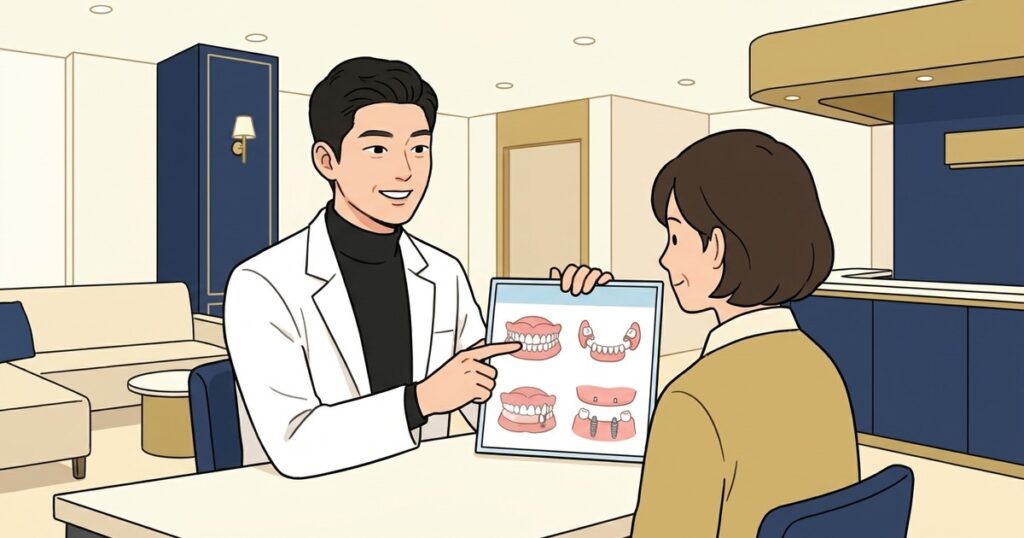
Key Takeaways
This article covers the main types of dentures available in Korea, helping you understand which option suits your oral health needs and lifestyle.
- Full dentures replace all teeth in an arch and typically require 4–6 dental visits over 3–5 weeks for proper fitting and adjustment.
- Partial dentures fill gaps between remaining natural teeth using metal or flexible frameworks, preserving your existing tooth structure.
- Implant-supported dentures anchor to 2–6 dental implants, offering improved stability and chewing efficiency compared to conventional removable options.
- Your dentist will recommend a denture type based on factors including remaining teeth, jawbone density, budget, and how long you plan to stay in Korea.
Choosing the right type of denture depends on how many teeth you’re missing, the health of your remaining teeth, and your daily comfort expectations. If you’re an expat, international student, or medical tourist navigating dental care in Korea, the process can feel overwhelming—especially when language barriers and unfamiliar insurance systems come into play. This guide breaks down each denture option clearly so you can walk into your consultation informed and confident.
What Are Dentures and Who Needs Them?
Dentures are removable dental appliances designed to replace missing teeth and restore both function and appearance. A denture is a prosthetic device that replaces one or more missing teeth along with surrounding gum tissue, allowing patients to chew food, speak clearly, and maintain facial structure.
You might consider dentures if you’ve lost teeth due to decay, gum disease, or injury. Some patients lose teeth gradually over many years, while others face sudden tooth loss from accidents or advanced periodontal conditions. Regardless of the cause, living without teeth affects more than your smile. Chewing becomes difficult, speech patterns change, and the jawbone begins to shrink without tooth roots to stimulate it.
Dentures aren’t just for elderly patients. Adults of all ages seek tooth replacement solutions when dental problems become severe. For English-speaking patients in Korea, the good news is that prosthodontic care here follows international standards, and many clinics offer consultations in English or provide interpretation services.
Before recommending a specific denture type, your dentist will examine your remaining teeth, assess gum health, and take X-rays to evaluate bone density. This evaluation typically takes one appointment lasting 30–60 minutes.
Full Dentures vs. Partial Dentures: What’s the Difference?
Full dentures replace all teeth in the upper or lower jaw, while partial dentures fill gaps when some natural teeth remain. Understanding this distinction helps you anticipate what your treatment will involve.
Full Dentures (Complete Dentures)
A complete denture is a removable prosthesis that replaces the entire arch of teeth, resting directly on the gums and relying on suction and oral musculature for retention. Full dentures work best for patients who have lost all teeth in one or both arches. The upper denture covers the palate to create suction, while the lower denture sits on the gum ridge.
Patients typically need 4–6 appointments over 3–5 weeks to complete the full denture process. This timeline includes impressions, bite registration, try-in appointments, and final delivery. Adjustments are common in the first few weeks as your mouth adapts.
Immediate dentures offer another option. These are placed right after tooth extraction, so you never go without teeth. The trade-off is that they require more adjustments as your gums heal and shrink over the following months.
Partial Dentures
When you still have healthy teeth remaining, a partial denture fills the gaps. These prosthetics use clasps or precision attachments to anchor onto your natural teeth, distributing chewing forces more evenly than a full denture can.
Partial dentures come in several materials:
- Cast metal framework: Durable and thin, these use cobalt-chromium alloy for strength. The metal clasps grip existing teeth securely.
- Flexible partials: Made from nylon-based materials, these are lighter and more comfortable for some patients. They blend naturally with gum tissue.
- Acrylic partials: Often used as temporary solutions or when budget is limited. They’re bulkier but easier to modify.
Partial dentures preserve your remaining teeth by preventing them from shifting into empty spaces. They also maintain your bite alignment, which protects the jaw joint from strain.
What Are Implant-Supported Dentures?
Implant-supported dentures attach to dental implants surgically placed in the jawbone, providing superior stability compared to conventional removable dentures. This option has become increasingly popular among patients frustrated by loose-fitting traditional dentures.
Two main types exist:
- Implant-retained overdentures: These snap onto 2–4 implants using locator attachments or a bar system. You remove them daily for cleaning. They offer significant improvement in retention while keeping costs lower than fixed options.
- Implant-supported fixed dentures (hybrid prostheses): These attach to 4–6 implants and are only removed by a dentist for maintenance. They feel most like natural teeth but require adequate bone volume and a higher investment.
The implant placement itself involves oral surgery. After placing the implants, a healing period of 3–6 months allows the bone to fuse with the titanium posts—a process called osseointegration. During this time, you may wear a temporary denture.
For patients visiting Korea for dental tourism, the extended timeline for implant-supported dentures requires planning. Some clinics coordinate staged treatment around multiple trips, while others offer accelerated protocols for appropriate candidates. Discussing your travel schedule upfront helps your dental team plan accordingly.
If you’re considering implants, you might find useful information in our guide on gum disease treatment in Korea, since healthy gums are essential for implant success.
How to Choose the Right Type of Denture
The best denture type for you depends on your remaining teeth, jawbone condition, lifestyle needs, and budget constraints. No single option works for everyone, and a prosthodontist can help you weigh the trade-offs.
| Factor | Full Denture | Partial Denture | Implant-Supported Denture |
|---|---|---|---|
| Teeth Required | None (all teeth missing) | Some healthy teeth remaining | None required; implants replace roots |
| Bone Density Needed | Minimal | Minimal | Moderate to high |
| Stability Level | Relies on suction and adhesives | Clasps anchor to natural teeth | Secured by implants; most stable |
| Treatment Duration | 3–5 weeks | 2–4 weeks | 4–9 months (includes healing) |
| Daily Removal | Yes | Yes | Overdentures yes; fixed hybrids no |
| Chewing Efficiency | 50–60% of natural teeth | 60–80% depending on design | 85–95% of natural teeth |
Cost varies significantly between options. Korean National Health Insurance covers a portion of denture costs for patients 65 and older who qualify, but most expats and tourists pay out of pocket. While specific prices depend on materials and complexity, implant-supported options generally cost several times more than conventional dentures due to the surgical component.
Think honestly about your priorities. Do you value maximum stability and are willing to undergo surgery and a longer process? A conventional full or partial denture might suit you if you prefer a non-surgical approach and faster results. Budget matters too, and there’s no shame in starting with a more affordable option and upgrading later.
Questions to Ask Your Dentist Before Choosing
• Given my remaining teeth and bone condition, which denture types are realistic options for me?
• How many appointments will I need, and can treatment be completed during my time in Korea?
What Does the Denture Fitting Process Look Like?
The denture fitting process involves multiple appointments over several weeks to ensure accurate fit, comfortable bite, and natural appearance. Rushing this process leads to poorly fitting dentures that cause sore spots and frustration.
Here’s what to expect:
- Step 1: Initial Examination and Treatment Planning – Your dentist examines your mouth, takes X-rays, and discusses your goals. If extractions are needed, those may happen at this appointment or a separate visit. This is also when you’ll discuss whether your remaining teeth can support a partial denture or if full replacement makes more sense.
- Step 2: Impressions and Measurements – Using alginate or silicone materials, your dentist captures detailed impressions of your gums and any remaining teeth. Bite registration records how your jaws come together. These records go to a dental laboratory where technicians craft your custom denture.
- Step 3: Try-In Appointment – Before finalizing, you’ll try a wax model of your denture. This lets you and your dentist assess the fit, tooth position, and overall appearance. Adjustments are made before the final version is processed.
- Step 4: Delivery and Initial Adjustment – You receive your finished denture. Your dentist checks the fit, makes minor adjustments, and teaches you how to insert, remove, and care for it. Expect some initial discomfort as your mouth adapts.
- Step 5: Follow-Up Visits – Most patients return 1–3 times in the first few weeks for adjustments. Sore spots develop as you begin wearing the denture regularly, and these are easily addressed by trimming pressure points.
For English-speaking patients unfamiliar with the Korean healthcare system, communication during these appointments matters greatly. Clinics serving international patients often have English-speaking coordinators or provide interpretation. Don’t hesitate to ask for written care instructions in English.
The clinical team at Yonsei Gunho Dental Clinic (연세건호치과) in Jamsil Saenae (잠실새내), Songpa-gu (송파구), Seoul, includes Dr. Kim Gun-min, a prosthodontist who specializes in tooth replacement solutions including dentures and implant prosthetics.
Caring for Your Dentures: Daily Maintenance Tips
Proper daily care extends the lifespan of your dentures and keeps your mouth healthy. Neglecting maintenance leads to staining, odor, and gum irritation.
Follow these guidelines:
- Clean your dentures daily using a soft brush and denture cleaner—not regular toothpaste, which is abrasive and can scratch the surface.
- Remove dentures at night to let your gums rest. Soak them in water or a denture solution to prevent warping.
- Rinse after eating to remove food particles. This simple habit prevents staining and bacterial buildup.
- Handle with care over a folded towel or basin of water. Dropping dentures on hard surfaces can crack or break them.
- Keep your mouth clean even without natural teeth. Brush your gums, tongue, and palate with a soft brush each morning before inserting your dentures.
If you have partial dentures, maintaining your remaining natural teeth is just as important. Brush and floss those teeth thoroughly, since their health directly affects how long your partial denture remains functional. Preventing gum disease protects both your natural teeth and the foundation supporting your prosthetic.
Dentures typically last 5–8 years before needing replacement. During that time, you’ll likely need periodic relining as your gum tissue and bone naturally change shape. Annual dental checkups allow your dentist to monitor fit and oral health.
For patients who also need other dental work during their time in Korea, coordinating treatments makes sense. If you’re scheduled for wisdom tooth extraction, for example, your dentist may recommend completing that before finalizing denture impressions.
Conclusion: Finding the Right Denture Solution in Seoul
Replacing missing teeth transforms daily life—eating becomes easier, speaking feels natural again, and confidence returns. Whether you need a full denture, partial denture, or implant-supported option depends on your unique oral condition and personal priorities.
The key is working with a dental team that takes time to explain your options clearly, especially when you’re navigating care in a foreign country. Understanding the differences between denture types puts you in a stronger position to make decisions that fit your health needs and schedule.
If you’re in the Jamsil Saenae area of Songpa-gu, Seoul, and considering denture treatment, Yonsei Gunho Dental Clinic offers consultations for English-speaking patients. You can reach the clinic at 02-6956-9949 or visit yonseigunho.com to learn more about available services.
This article is provided for general dental health information only and is not a substitute for professional medical advice on a specific diagnosis or treatment. Treatment methods, duration and outcomes vary with each patient’s oral condition, so please consult a dentist directly for an accurate diagnosis and treatment plan.
Frequently Asked Questions (FAQ)
How long does it take to get dentures made in Korea?
Most conventional dentures require 3–5 weeks from the first impression to final delivery. This includes 4–6 appointments for impressions, bite registration, try-in, and adjustments. Implant-supported dentures take longer—typically 4–9 months—because the implants need time to fuse with the jawbone before the final prosthetic is attached.
Can I eat normally with dentures?
You’ll regain most of your chewing ability, though it takes practice. Start with soft foods cut into small pieces, chewing evenly on both sides. Full dentures restore roughly 50–60% of natural chewing efficiency, while implant-supported dentures can reach 85–95%. Avoid very hard or sticky foods that could dislodge or damage your denture.
Do dentures hurt when you first wear them?
Some discomfort is normal during the adjustment period, which typically lasts 2–4 weeks. Sore spots may develop as your gums adapt to the new pressure. Your dentist will schedule follow-up visits to adjust areas causing irritation. If pain persists beyond the initial adjustment period, return for evaluation.
How do I know if I need full dentures or partial dentures?
The determining factor is whether you have healthy natural teeth remaining. If all teeth in an arch are missing or need extraction, full dentures are appropriate. If some teeth are healthy enough to preserve, a partial denture fills the gaps while using those teeth for support. Your dentist will assess tooth and gum health to recommend the appropriate option.
Are implant-supported dentures worth the extra cost and time?
For many patients, yes. Implant-supported dentures offer significantly better stability, improved chewing efficiency, and help preserve jawbone density over time. They eliminate concerns about dentures slipping during meals or conversation. The trade-off is a longer treatment timeline and higher initial investment, so the decision depends on your priorities and overall health.