Key Takeaways
This article covers everything English-speaking patients in Korea need to know about porcelain veneers, from procedure steps to recovery expectations.
- Porcelain veneers are thin ceramic shells bonded to front teeth, typically requiring 2–3 dental visits over 1–2 weeks to complete.
- Minimal tooth preparation (0.3–0.5mm) preserves most of your natural enamel while creating space for durable, natural-looking restorations.
- Veneers can address discoloration, chips, gaps, and minor misalignment without the longer timeline of orthodontic treatment.
- Communication in English is available at select Songpa-area clinics, helping international patients navigate consultations and aftercare instructions clearly.
If you’re considering improving your smile while living in or visiting Korea, porcelain veneers offer a reliable solution for various cosmetic dental concerns. Many English-speaking residents—whether expats, international students, or professionals on assignment—wonder if quality cosmetic dentistry is accessible without fluent Korean. The good news: clinics in the Songpa district, particularly around Jamsil and Jamsilsaenae, increasingly serve international patients with English-language consultations. This guide walks you through what to expect, how the procedure works, and what questions to ask before committing.
What Are Porcelain Veneers and Who Are They For?
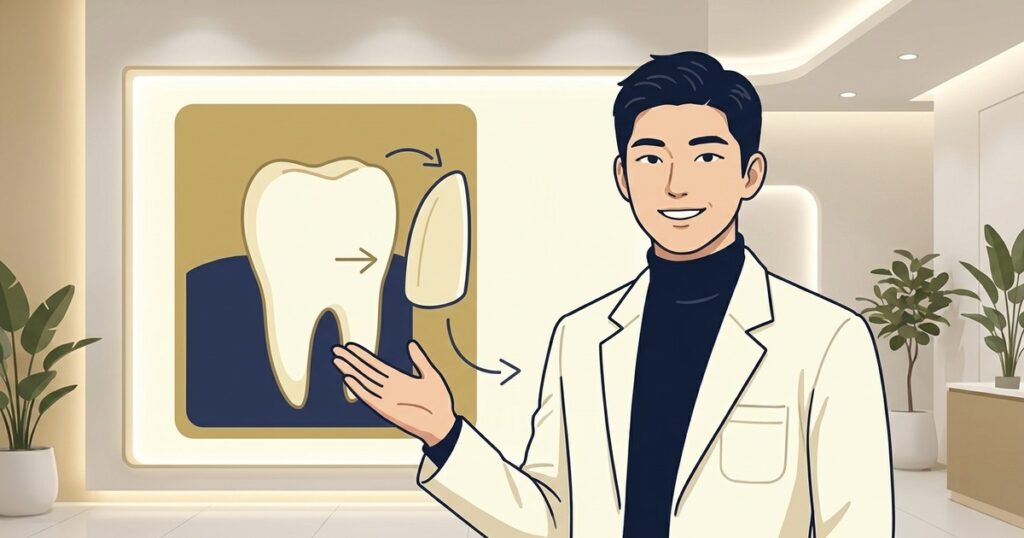
A porcelain veneer is a custom-made, wafer-thin shell of dental ceramic that permanently bonds to the front surface of a tooth to improve its appearance. Unlike crowns that cover the entire tooth, veneers address only the visible portion, making them a more conservative option for cosmetic enhancement.
Dental veneers work well for patients dealing with:
- Persistent tooth discoloration that doesn’t respond to whitening treatments
- Chipped, worn, or slightly fractured front teeth
- Small gaps between teeth (diastema)
- Minor misalignment when orthodontic treatment isn’t preferred
- Irregularly shaped teeth that affect smile symmetry
Not everyone qualifies for veneers. Patients with severe tooth decay, active gum disease, or habits like teeth grinding may need preliminary treatment first. During an initial consultation, a prosthodontist—a dental specialist focused on tooth restoration and replacement—evaluates your oral health, discusses your aesthetic goals, and determines whether veneers suit your situation. At Yonsei Gunho Dental Clinic in the Jamsilsaenae area, consultations can be conducted in English for international patients who feel more comfortable discussing treatment options in their native language.
Understanding the cost structure can feel daunting, especially when Korean national health insurance typically doesn’t cover cosmetic procedures. Many clinics offer itemized estimates during consultations, allowing you to plan financially before proceeding.
How Is the Veneer Procedure Done? Step-by-Step Process
The porcelain veneer process typically requires 2–3 appointments spread over 1–2 weeks, from initial preparation to final bonding. Here’s what each stage involves:
- Step 1: Consultation and Treatment Planning — Your dentist examines your teeth, takes X-rays if needed, and discusses your goals. Digital imaging or impressions capture your current tooth structure. This visit often takes 30–45 minutes and includes time to ask questions about the procedure, timeline, and expected outcomes.
- Step 2: Tooth Preparation — A small amount of enamel (typically 0.3–0.5mm) is removed from the front surface of each tooth receiving a veneer. This creates space for the ceramic shell without making your teeth appear bulky. Local anesthesia keeps you comfortable. Temporary veneers may be placed to protect your prepared teeth while the permanent ones are fabricated.
- Step 3: Impression and Shade Selection — Precise impressions of your prepared teeth are taken and sent to a dental laboratory. You’ll also choose the shade of your veneers, working with your dentist to match or enhance your natural tooth color. Labs typically need 5–10 business days to craft custom veneers.
- Step 4: Bonding and Final Adjustments — Once your veneers arrive, your dentist checks their fit, shape, and color against your teeth. After any necessary adjustments, each veneer is permanently bonded using dental cement and cured with a special light. The entire bonding appointment usually lasts 1–2 hours depending on the number of teeth involved.
Questions to Ask During Your Consultation
How much of my natural tooth structure will be removed, and is this reversible?
What type of ceramic material will be used, and how does it affect durability and appearance?
For patients with limited time in Korea—perhaps on a short work assignment or visiting for medical tourism—discuss your schedule constraints upfront. Some clinics can expedite laboratory work or adjust appointment timing to accommodate travel plans, though this varies by case complexity.
Porcelain Veneers vs. Other Cosmetic Options: Key Differences
Choosing between veneers and other treatments depends on your specific concerns, budget, and how much natural tooth structure you’re willing to modify. The table below compares common options:
| Treatment | Best For | Tooth Reduction | Typical Lifespan | Appointments Needed |
|---|---|---|---|---|
| Porcelain Veneers | Discoloration, chips, gaps, shape irregularities | 0.3–0.5mm | 10–15 years | 2–3 visits |
| Dental Bonding | Minor chips, small gaps | Minimal or none | 3–7 years | 1 visit |
| Teeth Whitening | Surface stains only | None | 6–12 months (varies) | 1–2 visits |
| Dental Crowns | Severe damage, root canal-treated teeth | 1.5–2mm (all surfaces) | 10–15 years | 2–3 visits |
| Orthodontics (Braces/Aligners) | Misalignment, bite issues | None | Permanent (with retention) | 12–24 months of treatment |
Dental bonding uses composite resin applied directly to teeth in a single visit. It’s less expensive than porcelain veneers but also less durable and more prone to staining over time. For patients seeking a quick, budget-friendly fix for a single chipped tooth, bonding often makes sense. For comprehensive smile enhancement across multiple teeth, porcelain veneers deliver more consistent, longer-lasting results.
If your primary concern is tooth color rather than shape, professional whitening may suffice. However, whitening cannot address intrinsic stains (discoloration from within the tooth) or structural issues. A prosthodontist can help you weigh these options during a consultation. For patients interested in understanding more about different types of dental restorations available in Korea, additional resources can clarify how various treatments compare.
How Long Do Veneers Last and What Affects Their Lifespan?
With proper care, porcelain veneers typically last 10–15 years before requiring replacement, though some patients maintain them even longer. Several factors influence durability:
- Oral hygiene habits: Brush twice daily with a non-abrasive toothpaste, floss regularly, and attend routine dental checkups every 6 months.
- Dietary choices: While porcelain resists staining better than natural enamel or composite resin, the cement edges can discolor. Minimizing coffee, tea, red wine, and tobacco helps maintain aesthetics.
- Parafunctional habits: Teeth grinding (bruxism) or clenching places excessive force on veneers, increasing fracture risk. Night guards can protect your investment.
- Trauma avoidance: Contact sports or habits like biting fingernails, chewing ice, or opening packages with your teeth can chip or dislodge veneers.
It’s worth noting that once a tooth is prepared for a veneer, the process is essentially irreversible—the removed enamel doesn’t regenerate. If a veneer fails years later, you’ll need a replacement veneer or possibly a crown. This long-term commitment is why thorough consultation matters before proceeding.
Many patients worry about sensitivity after the procedure. Some temporary sensitivity to hot and cold is normal during the first few days as your teeth adjust. Persistent or severe sensitivity should prompt a follow-up visit. Most patients report that any initial discomfort resolves within one to two weeks.
Finding Cosmetic Dental Care in Jamsil, Jamsilsaenae, and Songpa
The Songpa district, which includes the Jamsil and Jamsilsaenae neighborhoods, offers convenient access to various dental clinics, some of which cater specifically to English-speaking patients. When selecting a clinic for cosmetic dental work as an international patient, consider these factors:
- Language support: Confirm whether the clinic offers consultations in English. Some clinics have bilingual staff or can arrange interpretation services. Clear communication about your goals and concerns directly impacts treatment outcomes.
- Specialist credentials: For veneer procedures, a prosthodontist—such as Dr. Kim Gun-min, Prosthodontist at Yonsei Gunho Dental Clinic—brings specialized training in restorative and cosmetic dentistry. Asking about a dentist’s specific experience with veneers is reasonable and expected.
- Laboratory quality: The dental lab fabricating your veneers affects the final result. Clinics often partner with specific labs; you can ask about the materials and fabrication methods used.
- Scheduling flexibility: International patients sometimes have tight timelines. Clinics in the Jamsil area accustomed to serving expats and visitors may offer more flexible scheduling or expedited processes.
Transportation to Songpa is straightforward via Seoul’s subway system. The area around Jamsilsaenae station provides access to multiple dental clinics. If you’re managing other dental concerns alongside cosmetic goals—perhaps considering wisdom tooth extraction or addressing gum health issues—comprehensive care at a single location simplifies scheduling and continuity.
Insurance considerations also matter. Most international insurance plans don’t cover cosmetic procedures, so confirm coverage details before assuming reimbursement. However, itemized receipts from Korean dental clinics can sometimes be submitted to insurers for partial reimbursement depending on your specific policy.
Conclusion: Making an Informed Decision About Your Smile
Porcelain veneers offer a proven, lasting solution for patients seeking to address discoloration, chips, gaps, or minor misalignment. The procedure involves minimal tooth preparation, typically wraps up within 2–3 visits over 1–2 weeks, and delivers natural-looking results that can last well over a decade with proper care. Understanding the commitment involved—both financially and in terms of the irreversible nature of tooth preparation—helps you make a decision aligned with your goals and circumstances.
For English-speaking patients in Seoul, navigating dental care in a second language adds an extra layer of complexity. Clinics in the Jamsil, Jamsilsaenae, and Songpa areas that offer English consultations can make the process significantly smoother, ensuring your questions get answered and your concerns get addressed.
If you’re considering porcelain veneers or other cosmetic dental treatment in the Songpa district, a consultation is the practical first step. You’ll receive a personalized assessment of your oral health, a clear explanation of your options, and an opportunity to ask detailed questions before committing to any procedure.
For inquiries or to schedule a consultation at Yonsei Gunho Dental Clinic in Jamsilsaenae, you can call 02-6956-9949 or visit yonseigunho.com.
This article is provided for general dental health information only and is not a substitute for professional medical advice on a specific diagnosis or treatment. Treatment methods, duration and outcomes vary with each patient’s oral condition, so please consult a dentist directly for an accurate diagnosis and treatment plan.
Frequently Asked Questions (FAQ)
How much do porcelain veneers cost in Korea?
Veneer costs vary depending on the number of teeth, material quality, and clinic location. Korean national health insurance typically doesn’t cover cosmetic procedures. During a consultation, you can request an itemized estimate to understand the full cost before committing.
Are porcelain veneers painful to get?
Most patients experience minimal discomfort. Local anesthesia is used during tooth preparation, and any post-procedure sensitivity usually resolves within one to two weeks. If you have concerns about pain management, discuss them with your dentist beforehand.
Can I get veneers if I grind my teeth at night?
Teeth grinding (bruxism) increases the risk of veneer damage but doesn’t automatically disqualify you. Your dentist may recommend wearing a custom night guard to protect your veneers while you sleep. Addressing the grinding habit is important for long-term success.
How do I find an English-speaking dentist for veneers in Jamsil or Songpa?
Several clinics in the Songpa district, including areas near Jamsil and Jamsilsaenae, offer English consultations for international patients. Contact clinics directly to confirm language availability and ask about their experience serving English-speaking patients.
What happens if a veneer chips or falls off years later?
Damaged veneers typically require replacement since the underlying tooth has been permanently prepared. Contact your dentist promptly if a veneer chips, cracks, or becomes loose. Depending on the damage, repair or replacement options will be discussed.